
Short answer: most leaks in brazed aluminium radiator and condenser cores come from five causes: oil left on the parts, gaps that are too wide at the tube-to-header joint, too little or uneven flux, too much oxygen or moisture in the furnace, and a temperature profile that is too low or too high. Find out where the leaks are first, because the location usually points to the cause.
In controlled-atmosphere (CAB) brazing, the filler metal on the clad sheet melts and is drawn into the joints by capillary action. Anything that stops it wetting the surface, or leaves a gap too wide to fill, leaves a leak path. The tube-to-header joint is the critical one: a leak there is a failed core.
Start with where the leaks are
| Where the leaks are | Most likely cause | Check first |
|---|---|---|
| Random joints, all over the core | Contamination or flux | Cleaning, flux coverage |
| Same tubes or same header position every time | Fit-up or tooling | Header plate holes, tube insertion, assembly tooling |
| Mostly at one side of the belt | Uneven heating or flux on one side | Temperature profile across the belt, flux spray |
| Started suddenly on every core | Furnace atmosphere or temperature | Nitrogen supply, dew point, oxygen, thermocouples |
| Joints look eroded or tubes thin | Overheating | Peak temperature and time at temperature |
The five common causes
- Dirty parts. Forming and punching oils, or rust-protection oil, stop flux and filler wetting the surface. Clean header and side plates before brazing, and use oils made for brazed parts.
- Poor fit-up. Filler can only bridge small gaps. Published guidance puts the maximum joint gap for CAB at about 0.15–0.2 mm. Worn dies, out-of-round tube holes and loose core compression all open gaps.
- Not enough flux, or uneven flux. Too little flux means poor filler flow and inconsistent joints. Check the flux concentration and that the spray reaches the header joints, not only the fins.
- Furnace atmosphere. Oxygen and moisture in the brazing zone oxidise the surface faster than flux can clean it. Check nitrogen purity, the dew point and the curtains at the furnace ends.
- Temperature profile. Too low or too short and the filler does not flow fully; too high or too long and it can erode thin tubes and fins. Run a profile with thermocouples on real parts after any change.
A step-by-step way to find the cause
- Mark every leak on a batch of cores and look for a pattern by position.
- Braze a few clean, freshly degreased cores and compare.
- Measure the gaps at tube-to-header joints on assembled, unbrazed cores.
- Check flux concentration and coverage on a dried core before it enters the hot zone.
- Record nitrogen flow, dew point and oxygen readings, then run a temperature profile with parts on the belt.
- Change one thing at a time and test again.
If the furnace is slow to reach temperature or the zones are uneven, it may be electrical: see our guide to brazing furnace phase failure.
Testing and repair
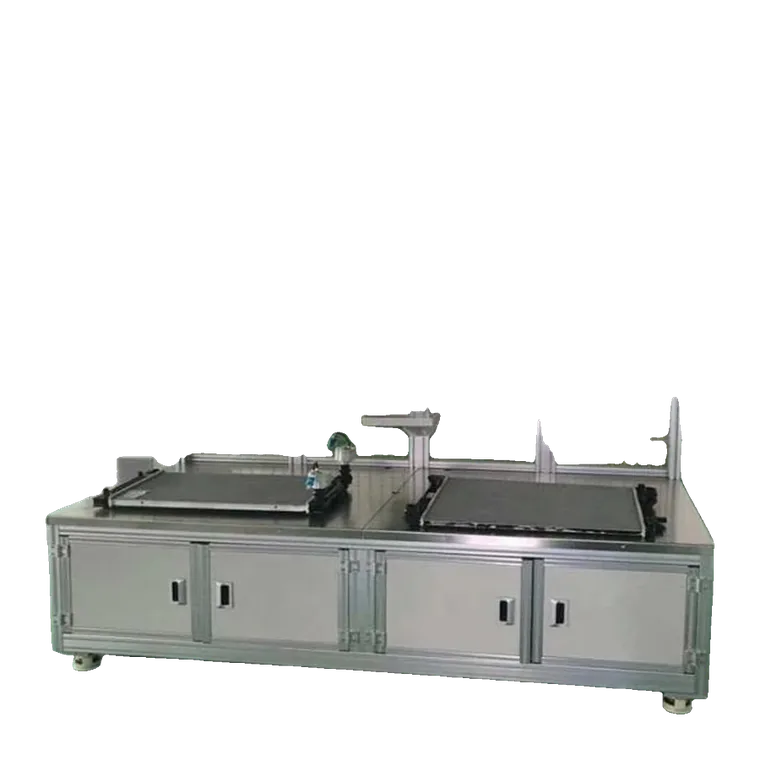
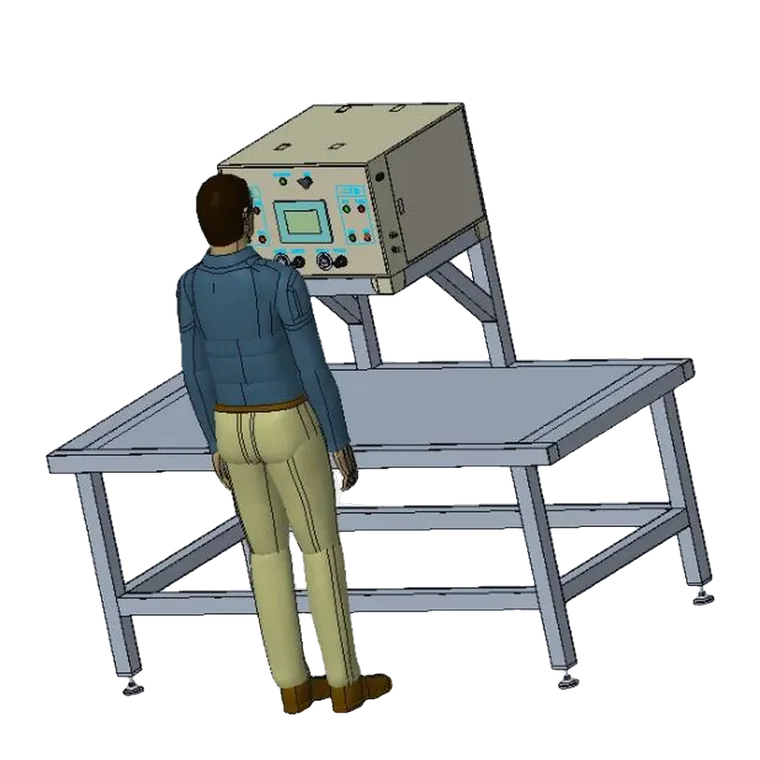
Every brazed core should be pressure-tested before tanks go on, so leaks are caught while the core can still be repaired or scrapped cheaply. Our air leak tester measures pressure decay up to 400 kPa; the water leak testing machine tests up to 10 MPa. See air or water leak testing for how to choose.
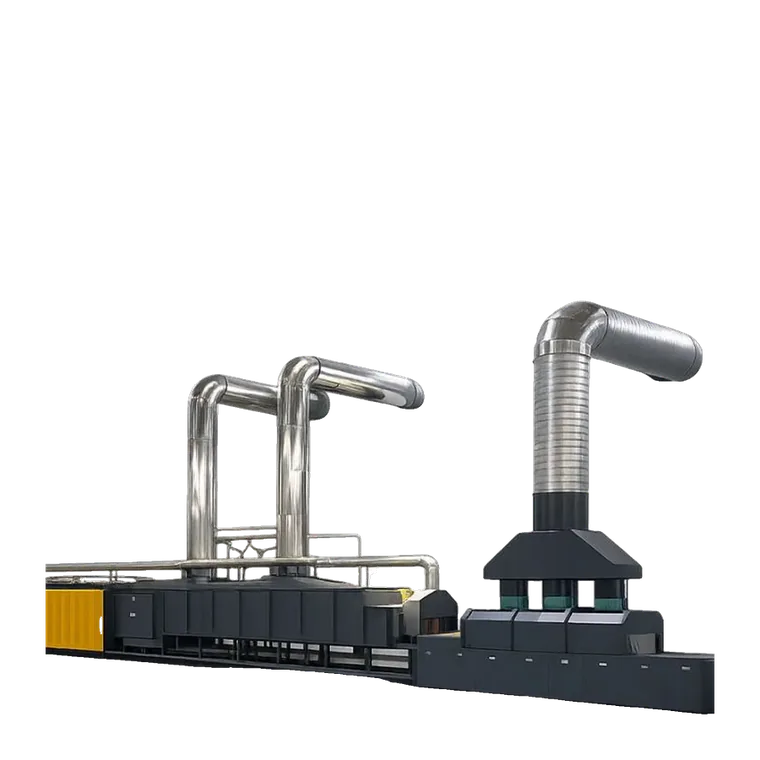
Our continuous CAB brazing furnaces are set up with your parts during commissioning, and our engineers can help trace leak problems on lines we supplied. Message us with photos of the leaking joints.
Frequently asked questions
Can a leaking brazed core be repaired?
Small leaks are often repaired with a low-melting aluminium repair alloy and a torch, but the repair must be pressure-tested again. If the same leak keeps appearing, fix the cause in the process.
Does a higher brazing temperature stop leaks?
Not usually. It can help if the profile is too low, but going higher risks eroding thin tubes and fins. Check cleaning, fit-up and flux first.
How much oxygen can a CAB furnace tolerate?
Published guidance suggests around 100 ppm in the brazing zone can be tolerated with flux. Lower is better, and moisture matters as much as oxygen.