
Short answer: a brazed parallel-flow AC condenser line needs a fin forming machine, a condenser core assembly machine, a fluxing and continuous nitrogen (CAB) brazing furnace, and a leak tester, plus packing at the end. Most plants also clean or degrease parts before brazing. Header pipes and flat tubes are often bought in ready to use, which keeps the first investment smaller.
A parallel-flow condenser is built from two header pipes, flat tubes running between them, louvered fins between the tubes, baffles inside the headers that set the refrigerant path, side plates and the inlet and outlet fittings. Everything is brazed together in one pass through the furnace, so the line is organised around getting a clean, tight assembly into that furnace.
The stations in order
| Station | What happens | Our machines |
|---|---|---|
| Fin forming | Aluminium coil is rolled into louvered fins at your fin height and pitch | 630 kN high-speed fin machine, precision fin machine |
| Cleaning | Oil from stamping and forming is removed so flux and filler can wet the joints | Ultrasonic cleaning machine |
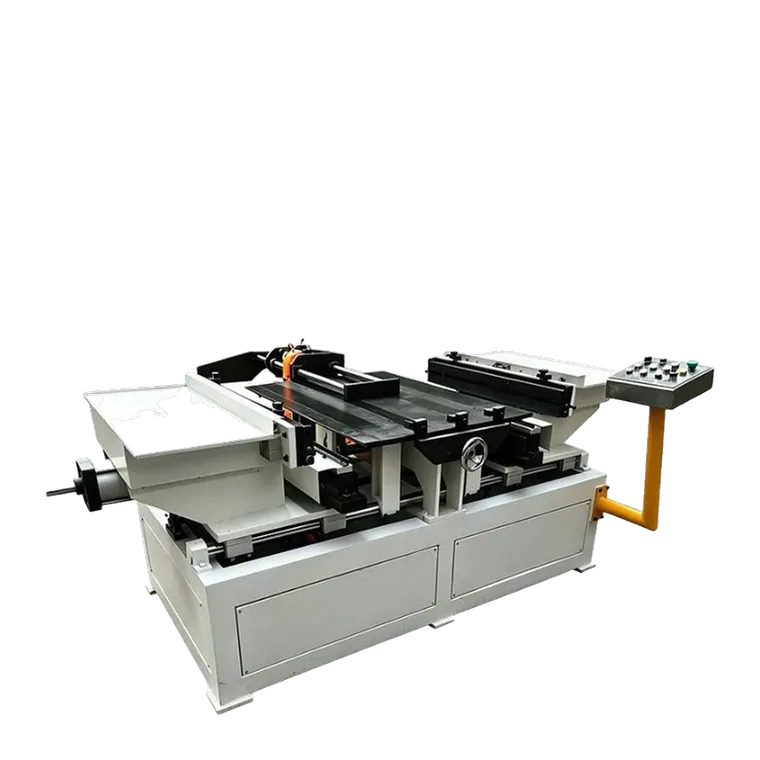
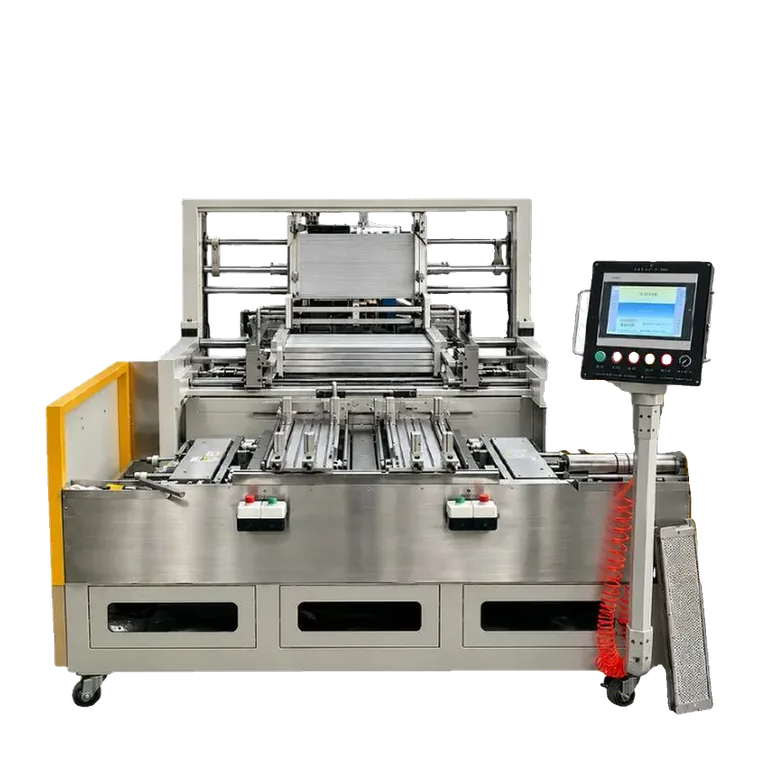
| Core assembly | Tubes and fins are stacked, the header pipes are pressed onto the tube ends and side plates added | Condenser core assembly machine |
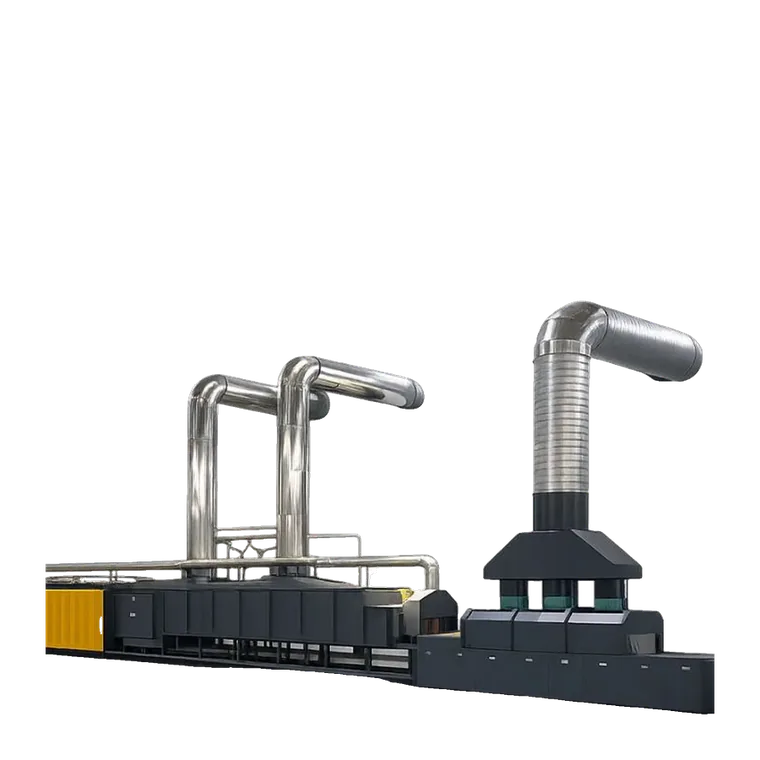
| Fluxing and brazing | Flux is applied, the core is dried and brazed in a nitrogen atmosphere | Continuous CAB brazing furnace, continuous brazing line |
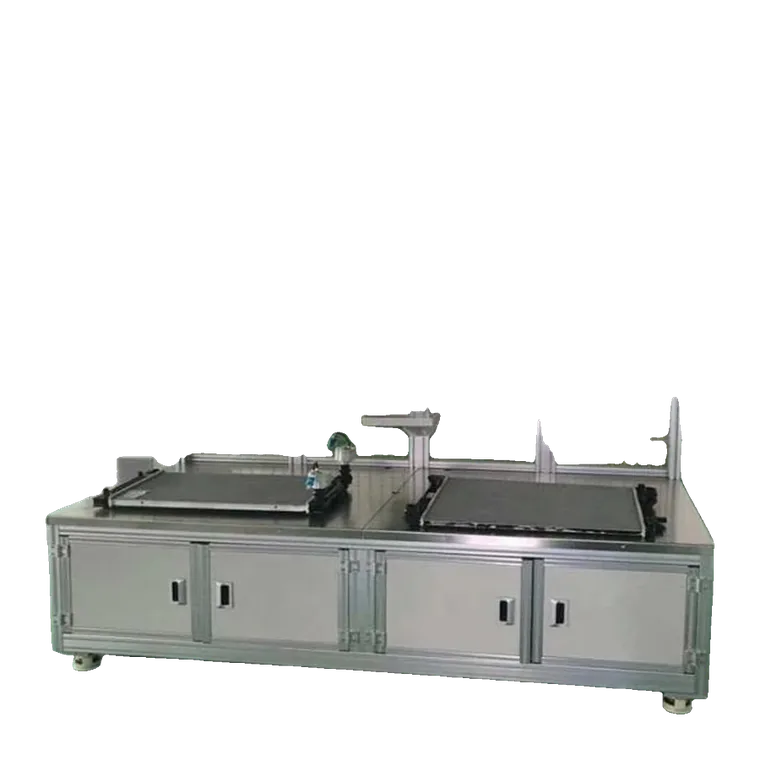
| Leak testing | Every brazed core is pressure tested | Air leak tester, water leak testing machine |
| Packing | Finished condensers are vacuum blister-packed for shipping | Vacuum packaging machines |
Parts you can make or buy in
- Flat tubes: condensers usually use multi-port extruded tubes. Most new plants buy them cut to length rather than running extrusion in-house.
- Header pipes: need slots for every tube and for the baffles. Slotting can be done in-house with dedicated tooling, or the pipes can be bought slotted.
- Fittings and brackets: inlet and outlet blocks are often welded or brazed on after the core, and are usually bought from a specialist.
Not every station is in our catalogue. Tell us which parts you plan to buy in and our engineers will plan the rest of the line around them.
What sets the output
As in a radiator plant, two stations decide how many condensers you make per shift: core assembly and the brazing furnace. Our condenser core assembly machine handles cores 300–850 mm wide between the headers, up to 60 tubes and 12–25 mm thick. A continuous CAB furnace runs a mesh belt at 200–1000 mm/min. Sizing the furnace to the core builder, rather than the other way round, avoids paying for furnace capacity you cannot feed.
Points that matter more for condensers
- Tube insertion depth: how far each tube enters the header affects whether filler metal flows into the tube ports during brazing. Set it in the assembly tooling, not by eye.
- Cleanliness: condenser joints are small, so oil left on parts shows up as leaks after brazing.
- Leak test pressure: condensers run at refrigerant pressure, so agree the test pressure and method with your customer. Our air leak tester tests up to 400 kPa; the water leak testing machine goes up to 10 MPa.
What to send us
- A drawing or photo of the condensers you plan to make, with core sizes.
- Target output per shift.
- Which parts you will buy in: tubes, slotted headers, fittings.
- The power and floor space you have.
You can also see every station on our condenser production line page, or choose machines step by step. For the furnace choice, see CAB or vacuum, continuous or batch.
Frequently asked questions
Can a radiator line also make condensers?
Some stations can be shared, such as fin forming, the brazing furnace and leak testing, if the parts fit and each has its own temperature profile. Core assembly needs a condenser machine because the headers and tubes are different.
Do I need a tube mill for condensers?
Usually not. Condensers use extruded multi-port tubes, which most plants buy cut to length. Welded tube mills are used for radiator tubes.
Do you install the condenser line?
Yes. Our engineers install and commission the machines, set the brazing profile with your parts and train your operators.