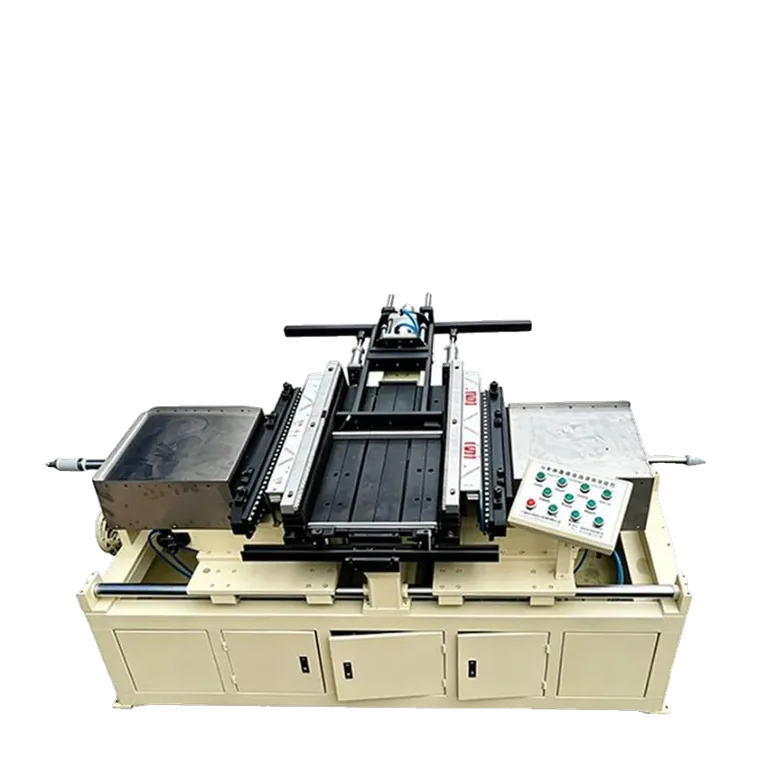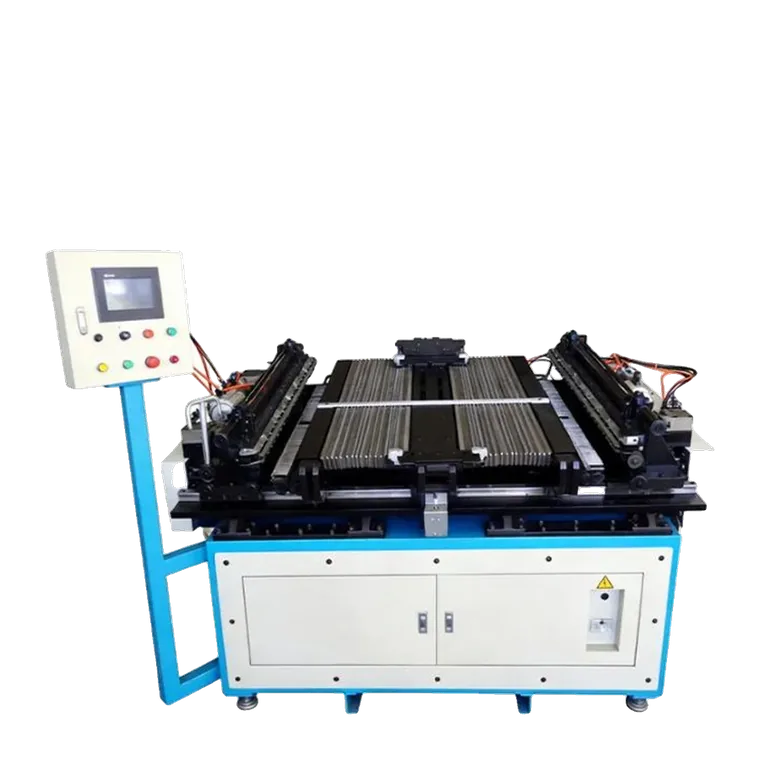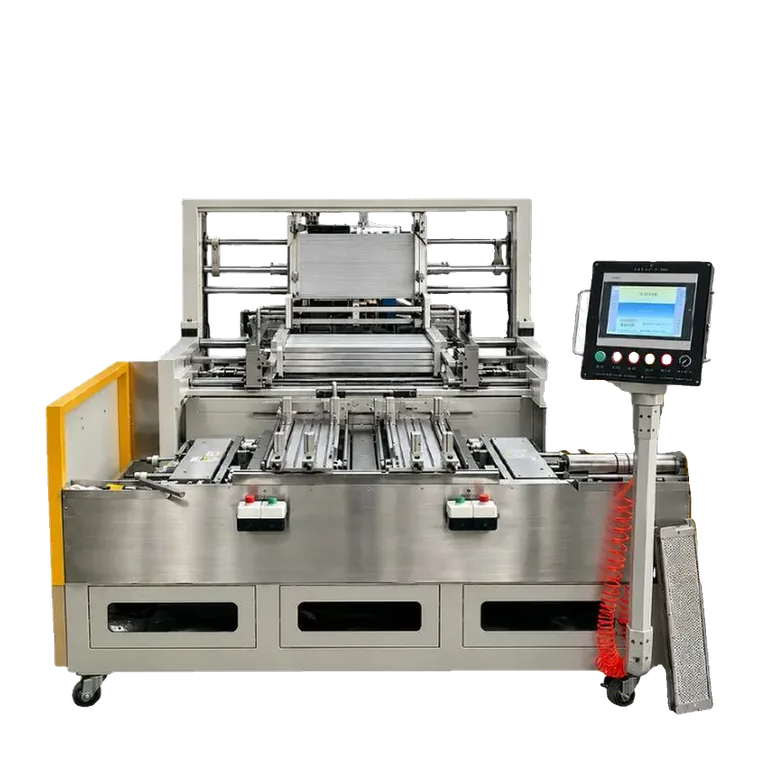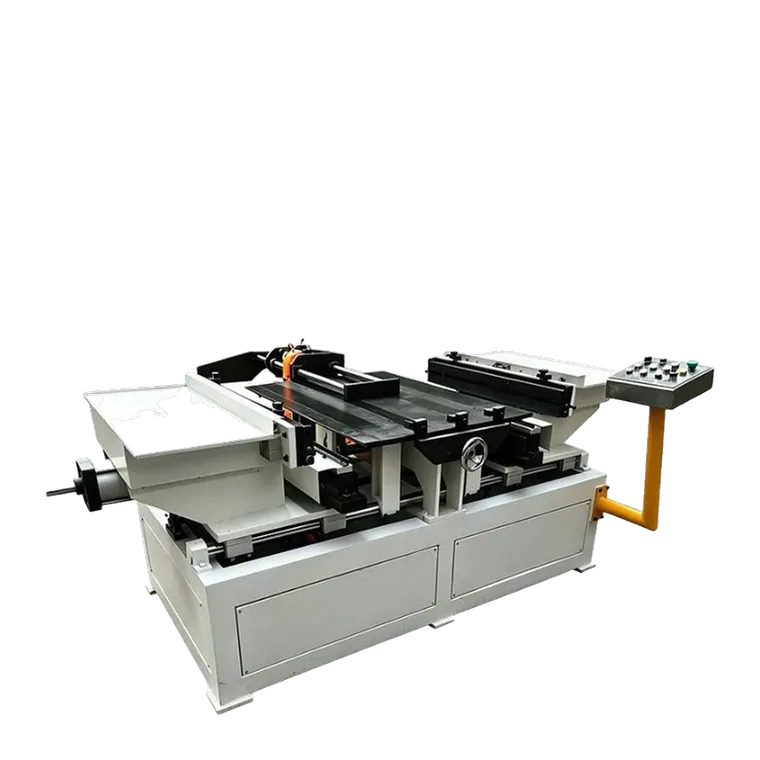

Short answer: for a new radiator plant making many models in moderate volume, a semi-automatic core builder is usually the right first machine. A manual jig is enough for repairs, prototypes and very short runs. A servo builder with an automatic tube magazine pays off when you run the same models for long periods and want less operator work per core.
The core builder is where tubes, fins, header plates and side plates come together into one core before brazing. Every core your plant sells passes through it, so the choice affects output, how fast you can change models, and how many operators you need at this station.
Three levels of automation
| Type | How tubes and fins are loaded | Model changes | Best for |
|---|---|---|---|
| Manual jig | By hand, pressed with a hand or simple pneumatic clamp | Quick, low tooling cost | Repairs, prototypes, small batches |
| Semi-automatic | Operator lays tubes and fins; the machine clamps, inserts header plates and compresses the core | Moderate; size set on the machine | Most new radiator plants, many models |
| Servo with tube magazine | Tubes fed automatically from a magazine; servo axes position and compress | Slower to change, very repeatable | Long runs of the same models, higher output |
"Servo" describes how the machine moves, not how much it does by itself. A servo builder can still need an operator to load fins, so ask each supplier exactly which steps stay manual.
What to decide before choosing
- Core size range. List the smallest and largest cores you make: height, width and thickness. The machine must cover all of them.
- Rows and tube pitch. One-row and two-row cores need different tooling. Check the tube pitch and fin height the machine accepts.
- Models and batch size. Many models in short runs favour a semi-automatic machine that changes over quickly. Few models in long runs favour automatic tube feeding.
- Output per shift. Count good cores per staffed hour, including loading, header plate insertion, unloading and changeovers, not just the machine cycle.
- Operators. Decide how many people you can put on this station per shift.
Our core builders
- Semi-automatic core builder: core height 300–850 mm, core thickness 16–56 mm, 10 mm tube pitch. A good first machine for a multi-model plant.
- Semi-automatic core builder SH850: cores 310–1050 mm high and wide, up to 56 mm thick in two rows, 220 V.
- Servo 2-row core builder: two-row cores with 5 mm fin, servo drive and hydraulic clamping, about 4–5 minutes per core.
- Core builder with tube magazine: automatic servo tube feeding, cores 300–900 × 300–800 mm, 1–7 tube layers, for long runs.
Condensers and intercoolers need their own builders: see the condenser core assembly machine and the plate and bar core assembly machine.
Check at acceptance
Run your smallest and largest cores on the machine before it ships. Measure squareness and dimensions, check that every tube enters the header plate fully, and look for crushed or leaning fins. Problems found here would otherwise show up as leaks after brazing.
To get a recommendation, send us your core drawings or sizes, the number of models and your target output. You can also build your line online and send it to our engineers.
Frequently asked questions
Can one core builder make both radiators and condensers?
Usually not. Condenser cores use flat multiport tubes and headers with different geometry, so they need a dedicated condenser core builder or a separate tooling set.
Is a servo core builder always better?
No. It gives more repeatable positioning and less operator effort, but it costs more and suits long runs. For many models in small batches, a semi-automatic machine is often more productive.
How many core builders does a small plant need?
It depends on your output and core sizes. Tell us your monthly target and model mix, and we will size the station.