
Short answer: if a brazing furnace heats slowly, never reaches its set temperature, or shows one phase current much lower than the others, suspect a lost phase in the heating circuit. Check in this order: incoming supply, fuses and contactors, the power controller, cables and terminals, then the heating elements. If all of those are fine, the problem is usually the temperature measurement rather than the heating.
Electrically heated brazing furnaces, both vacuum furnaces and continuous nitrogen (CAB) furnaces, draw their heating power from a three-phase supply. Losing one phase cuts the available power and unbalances the heating zones, so brazing quality drops long before an alarm appears.
Phase failure or phase imbalance?
A phase failure is the complete loss of one or more phases. A phase imbalance means all phases are present but at different voltages. Both reduce heating performance, but a failure usually shows as zero current on one phase, while an imbalance shows as currents that are uneven but not zero.
Symptoms and where to look
| What you see | Likely cause | First check |
|---|---|---|
| One phase reads zero current | Blown fuse, open contactor, broken element or cable | Fuses and contactor, then element continuity |
| All phases low, heating slow | Low or unstable supply voltage | Voltage between each pair of incoming phases |
| Current uneven between phases | Imbalance in supply or a failing power controller | Controller input and output voltages |
| Terminal discoloured or burnt | Loose or oxidised connection | Tighten or replace lugs, clean contacts |
| Temperature reading jumps or drifts | Thermocouple or compensation wire fault | Thermocouple circuit, controller and PLC settings |
Where the faults usually are
- Supply side: missing phases or voltage swings from the plant's distribution, a blown main or branch fuse, or a breaker or contactor with burnt or sticking contacts.
- Power control: depending on the furnace, a magnetic voltage regulator or a thyristor power controller. Look for uneven input or output voltage, failed thyristors and loose internal connections.
- Cables and terminals: loose screws, oxidation and overheated or burnt lugs between the cabinet and the furnace, especially at the terminals on the furnace body.
- Heating elements: cracks, burn-out or loss of continuity from age, overheating or mechanical damage. In vacuum furnaces, copper or zinc vapour from the workpieces can pit elements and reduce their cross-section until they fail.
- Measurement and control: a broken thermocouple, a poor connection or damaged compensation wire, or unsuitable PID settings can look like a heating fault even when all three phases are healthy.
Note that a broken element can leave full voltage on the supply terminals while that circuit carries no current. Always confirm with a proper electrical test rather than a voltage reading alone.
A safe order of checks
Stop the heating program, isolate and lock off the main supply, and let the furnace cool before any internal inspection. Electrical testing should only be done by a qualified electrician.
- Read the three-phase ammeter and note any controller alarms or error codes. A zero reading on one phase points to an open circuit.
- Measure the voltage between each pair of incoming phases with a suitably rated meter and compare it with the furnace's rated supply.
- Inspect fuses, the main breaker, contactors and the voltage regulator or thyristor modules for damage, burnt contacts or loose wiring.
- Check the power cables and terminals, including the lugs inside the furnace, for looseness, oxidation and heat marks.
- With the furnace cold and isolated, inspect the heating elements and test their continuity and resistance.
- If the power circuit and elements are fine, check the thermocouples, compensation wire, temperature controller and PLC parameters.
Do not restart the furnace until the cause has been found and repaired and the equipment has been confirmed safe.
Preventing the next failure
- Check electrical connection points every month for looseness, oxidation and overheating.
- Inspect the heating elements thoroughly every six months.
- Handle elements and fixtures carefully: knocks are a common cause of cracks.
- When brazing copper or other parts that release metal vapour, a multi-stage heating profile reduces how long the elements sit in vapour at high temperature.
- Monitor the plant's power quality. Where harmonic distortion is high, an active harmonic filter may be worth installing after a professional assessment.
About our brazing furnaces
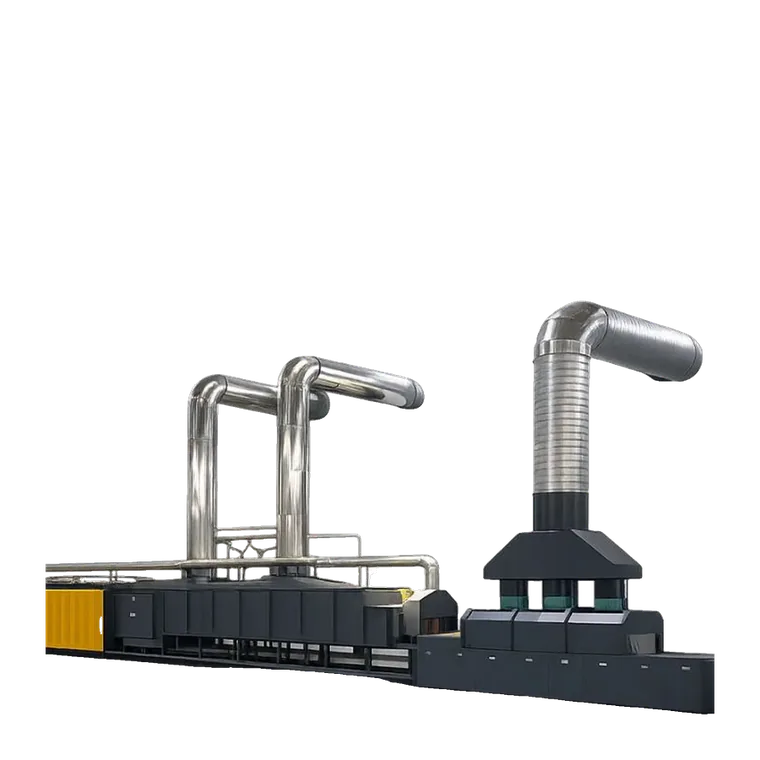
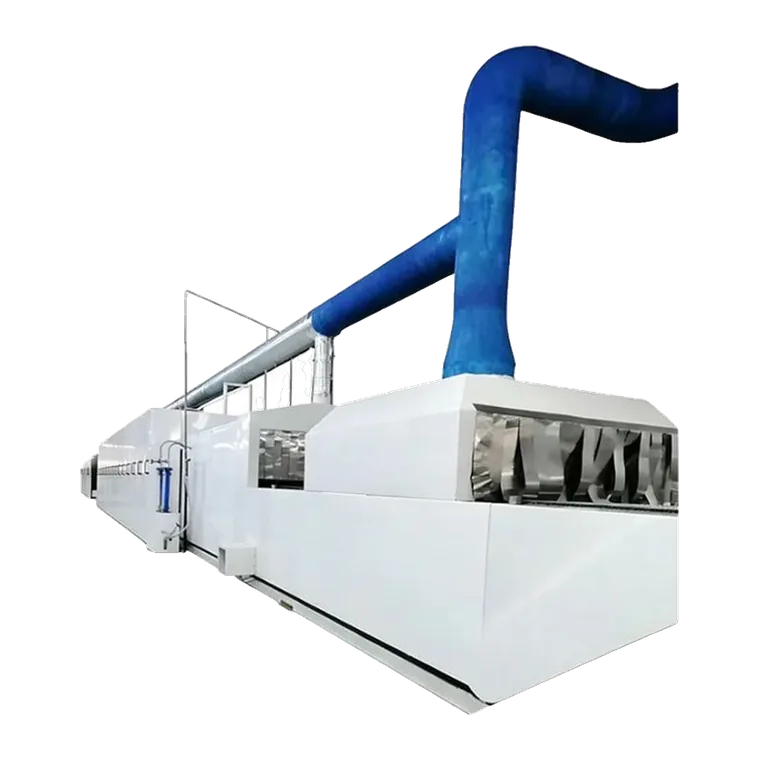
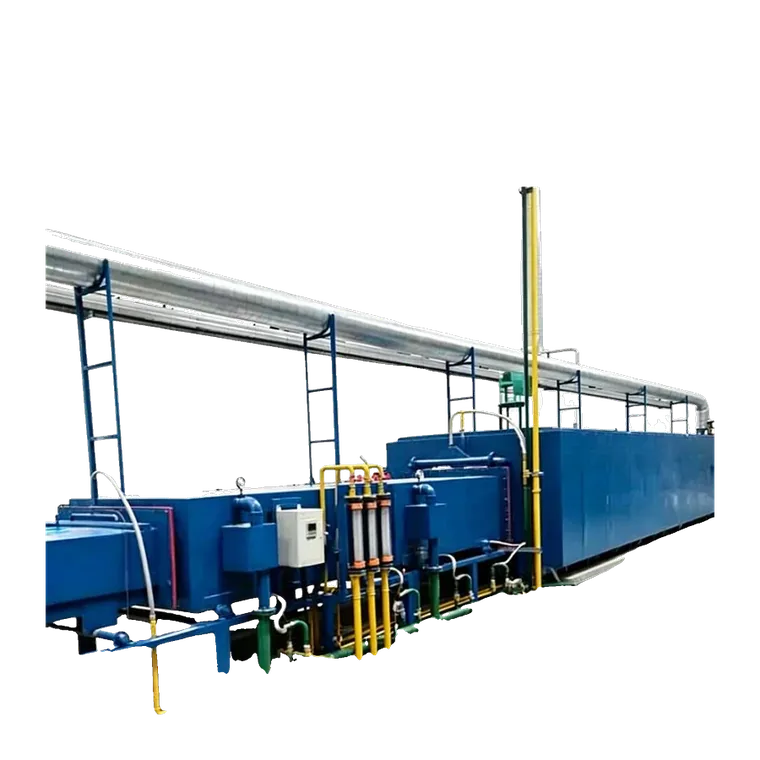
The furnace in our standard aluminium radiator production line is a continuous nitrogen brazing furnace, 46.5 m long with a 1200 mm belt, with flux spray, drying, preheat, brazing and cooling zones in one line. Its total installed power is 471.5 kW, and it draws about 60% of that once at temperature, so a stable supply and sound connections matter. We also supply a continuous CAB furnace and a compact furnace for smaller outputs. Our technicians install and commission each furnace on site and train the operators on routine checks.
If the furnace heats correctly but cores still leak after brazing, the cause is usually in the parts or the process: see why brazed radiator cores leak, and how to fix it.
Frequently asked questions
Can a lost phase damage brazed parts?
Yes. Lower heating power and unbalanced zones mean parts may not reach brazing temperature evenly, which leads to poor joints and leaks found later at leak testing.
Is phase failure only a vacuum furnace problem?
No. Any furnace heated from a three-phase supply can lose a phase. Metal vapour damage to elements is mainly a vacuum furnace issue.
How often should heating elements be inspected?
A thorough inspection every six months is a good baseline, with monthly checks of the electrical connections.