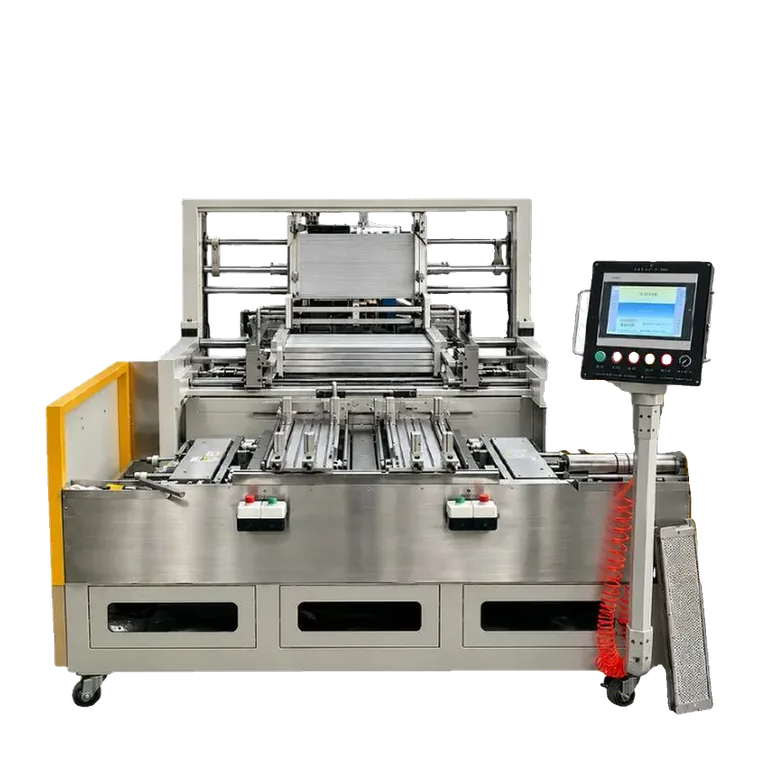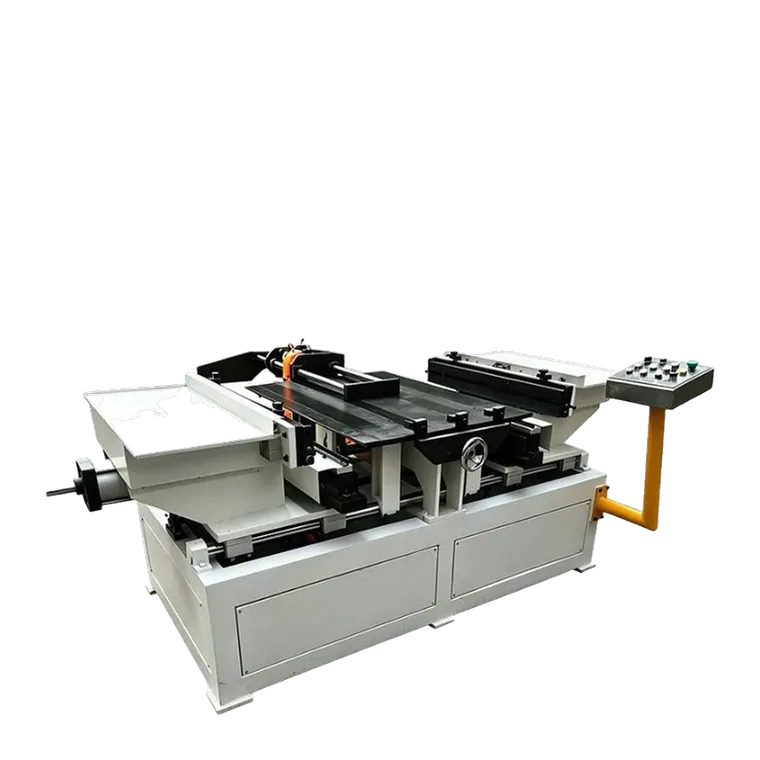

Short answer: a fin forming machine feeds thin metal strip, usually aluminium, from a coil, forms it into a corrugated fin by stamping or rolling, and cuts it to length for core assembly. Rolling is faster and suits lower fins with wider pitches; stamping handles taller fins with tighter pitches.
Fins carry most of a radiator's heat-transfer area, so their height, pitch and consistency directly affect both cooling performance and how smoothly cores assemble.
Stamping or rolling
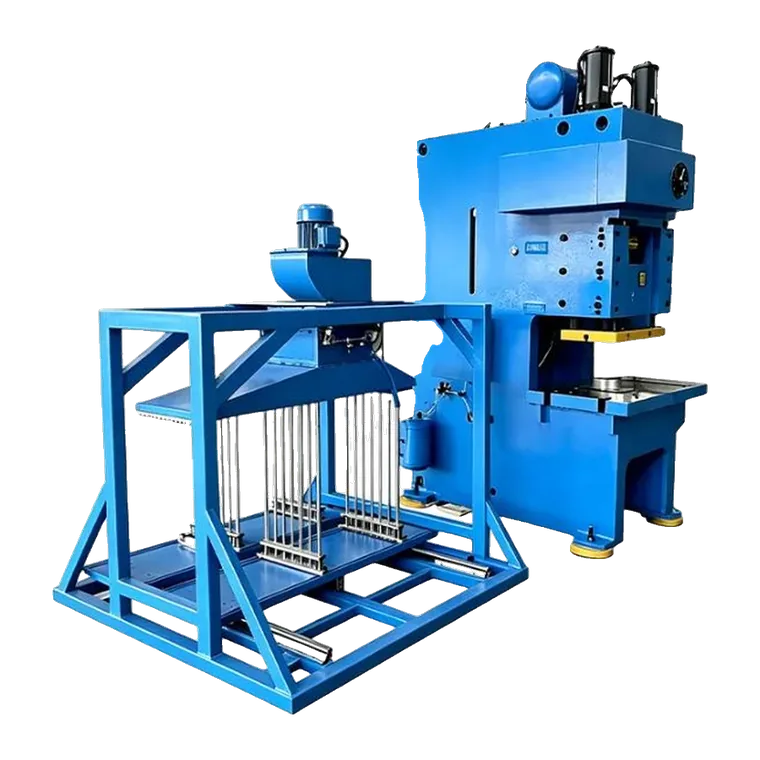
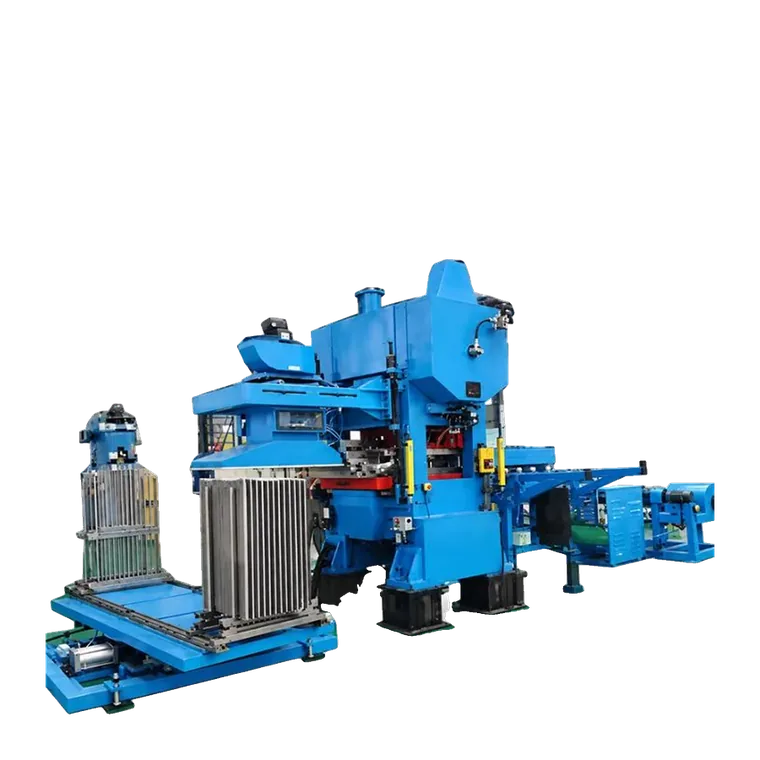
- Stamping: a high-speed press drives precision dies, in some designs through cams that move upper and lower blades together, setting fin height and pitch on every stroke.
- Rolling: the strip passes between forming rollers that shape it step by step into the fin profile. It runs continuously and covers different fin sizes with different roller sets.
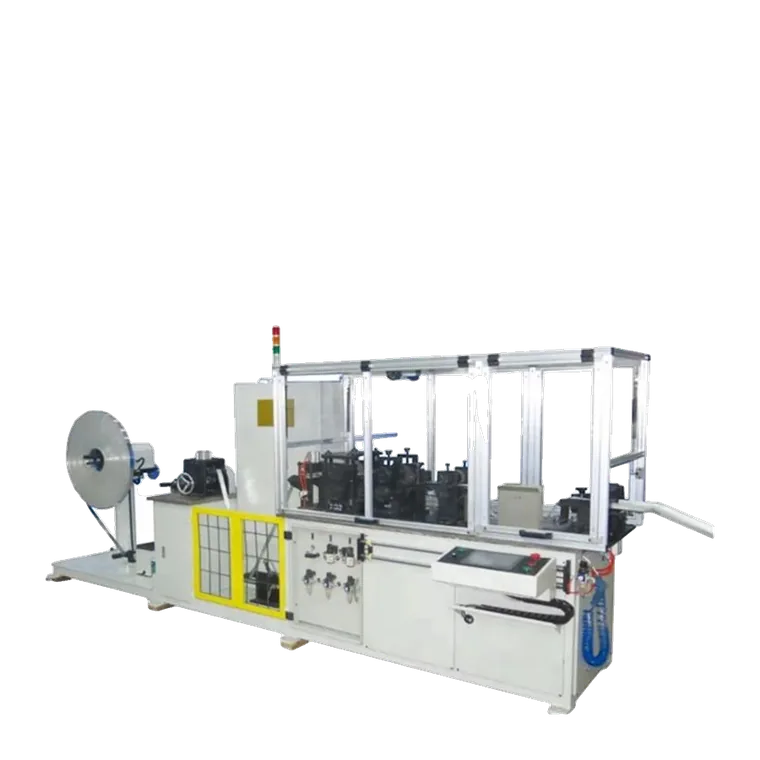
What a fin line is made of
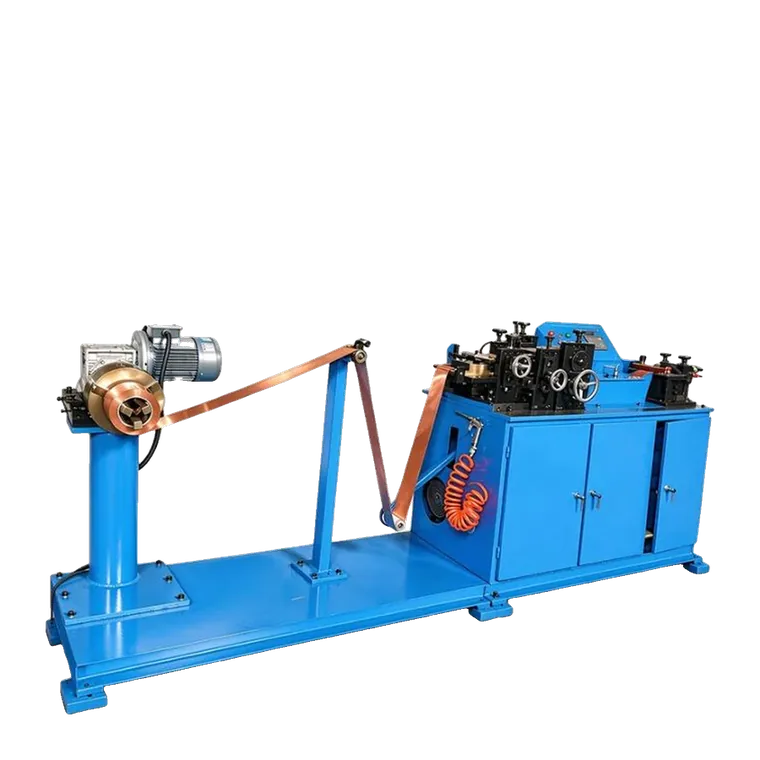
- Uncoiler holding the strip coil.
- Feeding system that controls strip speed and position.
- Forming unit with dies or rollers.
- Control system for speed, count and settings.
- Cutting device that cuts fins to the length of the core.
Typical specifications
Ranges differ between machines and tooling. As a general reference, high-speed fin forming equipment works within:
| Parameter | Typical range |
|---|---|
| Fin height | 1–12 mm |
| Fin pitch | 4–10 mm |
| Forming accuracy | ±0.05 mm |
| Forming frequency | Around 130 strokes per minute |
| Materials | Aluminium, copper, stainless steel |
| Strip thickness | 0.08–0.4 mm |
What decides fin quality
- Fin height and pitch set the final geometry.
- Strip thickness changes forming behaviour and the tooling needed.
- Steady feeding and precise tooling keep every fin the same.
- On high-speed stamping machines, a good unloading design stops scrap from building up between the dies.
Our fin machines
| Machine | Key figures | Suited to |
|---|---|---|
| Fin forming machine BZ-120 | Up to 120 m/min, up to 60 cuts/min, strip up to 100 mm wide | Car radiator fins in volume |
| 630 kN high-speed fin forming machine | 630 kN nominal pressure, 40 mm stroke | Aluminium radiator fins |
| Precision fin machine | Fins 0.2–0.3 mm thick, pitch 6.5–10 mm, ±0.1 mm | Thin fins for light radiators |
| High-speed fin press | 450 kN, strip up to 300 mm wide | Wide heat-exchanger fins |
| Copper and aluminium fin machine | Fin height made to order | Copper or aluminium heat exchangers |
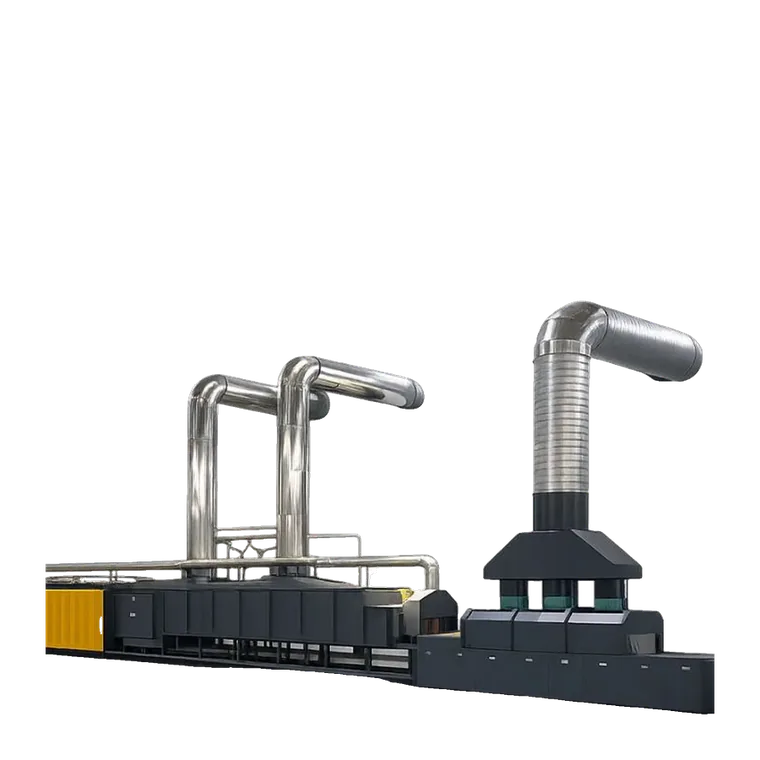
Our standard aluminium radiator production line uses three BZ-120 fin machines for a plant making around 20,000 radiators a month; the fins go straight to core assembly without cleaning. Compare all models under radiator fin forming machines, and see our aluminium fin coil if you also need strip.
To choose a machine, we need your fin width, height, pitch, strip thickness, material and required output.
Frequently asked questions
What materials can a fin forming machine process?
Aluminium, copper and stainless steel strip, depending on the machine and tooling.
What affects fin accuracy most?
Strip thickness, feeding stability, tooling precision and forming speed.
How many fin machines does a radiator plant need?
It depends on output and fin sizes. Our standard plant for around 20,000 radiators a month uses three BZ-120 machines.