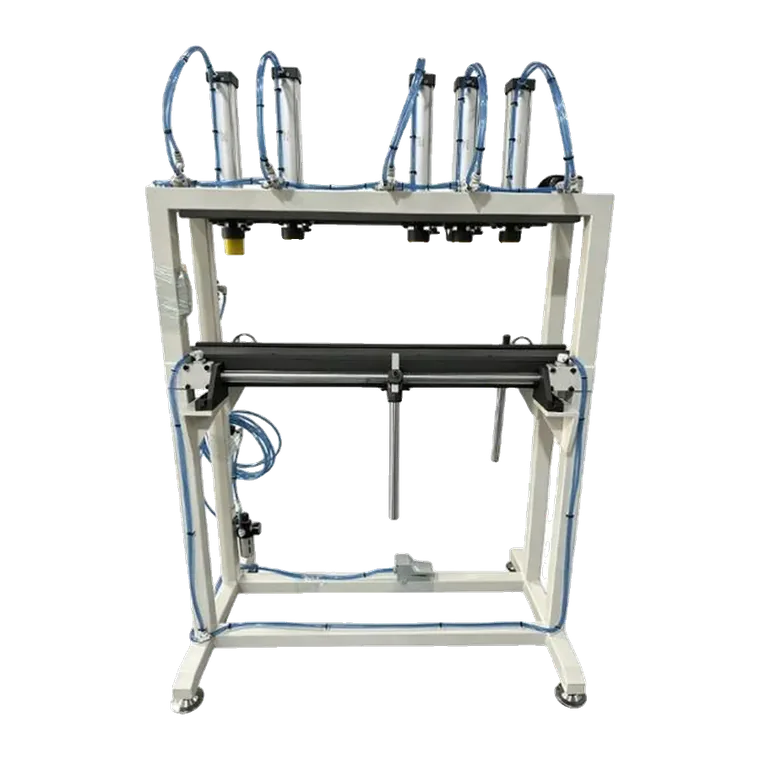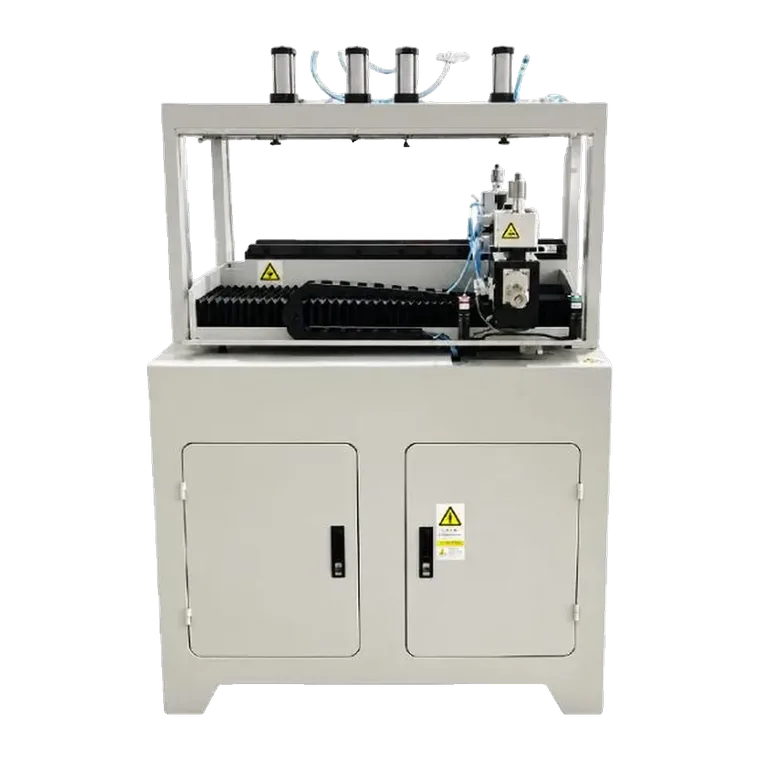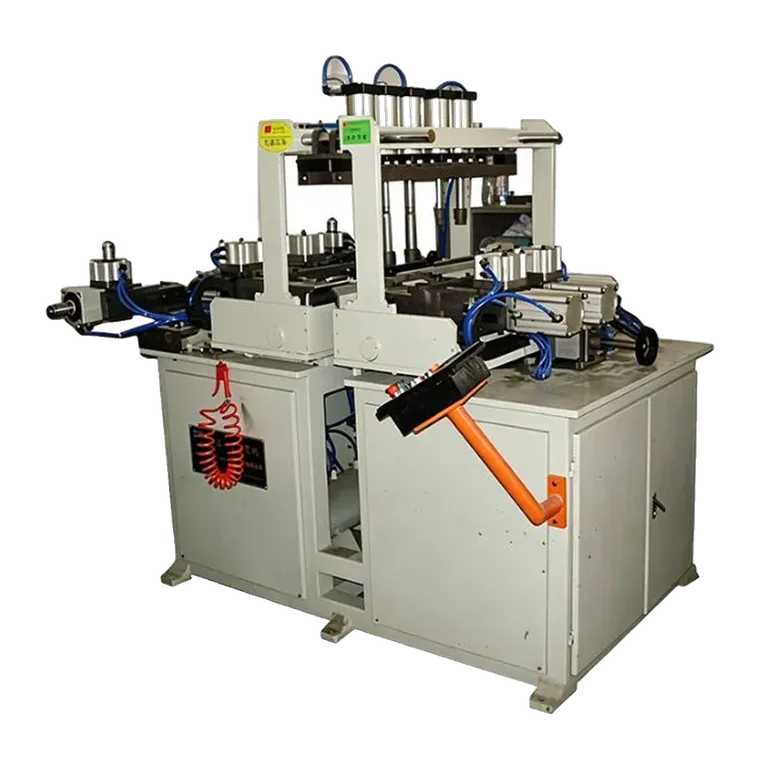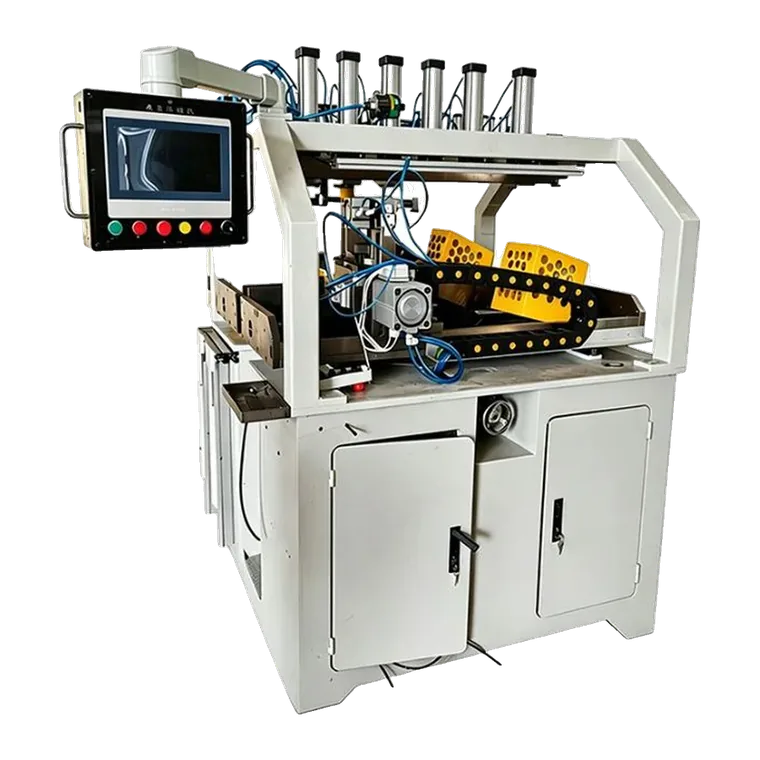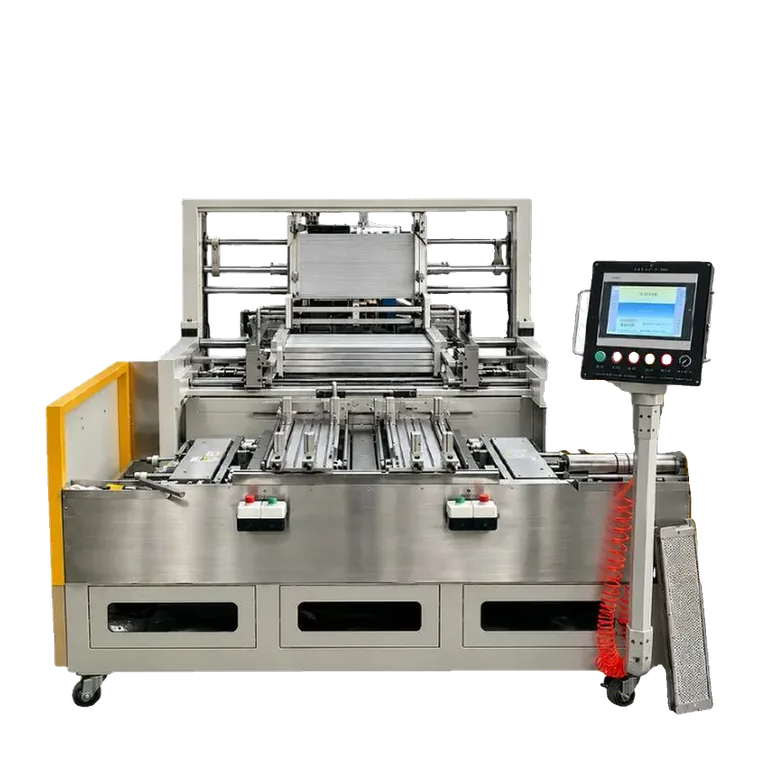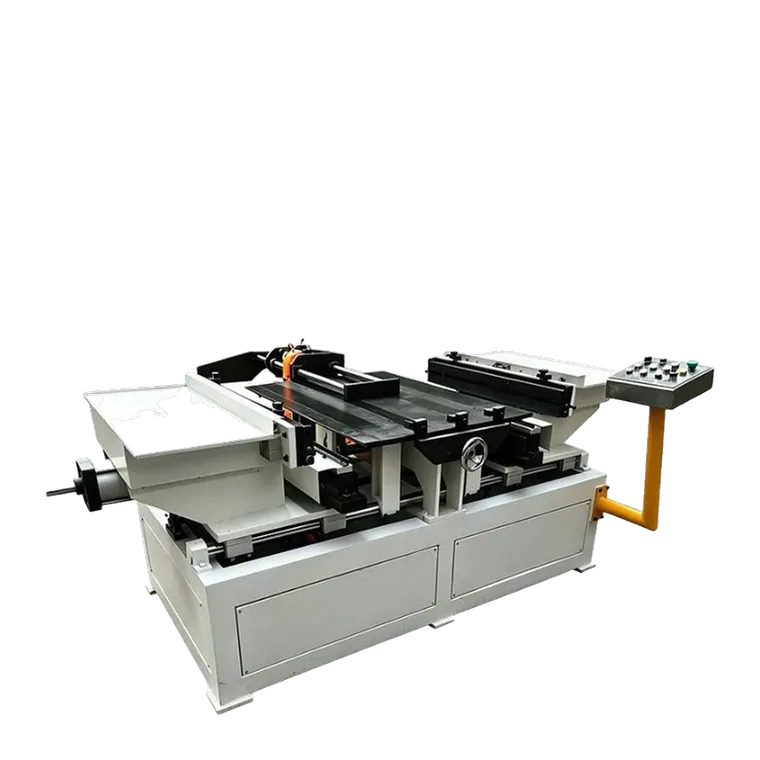

Short answer: a radiator clinching (crimping) machine bends the tabs of the aluminium header plate over the flange of the plastic tank, squeezing a gasket between them to make a sealed joint. Manual and pneumatic machines suit repair shops and short runs; servo machines clinch all four sides at once with stored settings, which gives the most consistent seal in volume production.
What clinching has to get right
The tank, the gasket and the header plate are held together only by the bent tabs, so the clinch decides whether the radiator seals. There are three typical faults:
- Too little: tabs do not hold the tank firmly and the gasket is not compressed enough, so coolant can escape.
- Too much: the gasket is crushed or the plastic tank flange cracks.
- Uneven: pressure or position varies along the plate, so one side seals and another does not.
The gasket is usually an elastomer or silicone-based seal chosen for the coolant and operating temperature. Whatever the machine, the goal is the same: the same bend, at the same depth, on every tab.
Three generations of clinching machines
| Type | How it works | Best for | Limitation |
|---|---|---|---|
| Manual tools | Hammer or hand tool, tab by tab | Repairs, one-off parts | Result depends on the operator |
| Pneumatic or hydraulic | Cylinders drive the clinching tool | Short and medium runs | Fixed force, setup per model |
| Servo | Servo axes control position, speed and sequence | Volume production, many models | Higher investment |
Pneumatic machines are simple but need a steady compressed-air supply. Hydraulic machines give high force but need regular maintenance of the hydraulic system. Both took tank assembly from hand work to repeatable machine work.
What servo control adds
With servo drives the machine controls exactly where the tool is and how fast it moves, rather than simply pushing until a cylinder stops. Depending on the design, a servo machine clinches all four sides at once or uses separate modules for the long and short sides. Typical additions are:
- Position feedback on the clinching tool.
- Pressure or force monitoring. A pressure sensor measures system pressure; a force sensor measures the force actually applied to the part. They are not the same thing.
- Stored programs for each radiator model, so a changeover is a selection rather than a re-setup.
- Data records for each part, useful for traceability.
Quality systems such as IATF 16949 expect process monitoring and records, although they do not require servo clinching as such.
How to choose a clinching machine
- Sizes: check the machine covers your longest header plate, your core height and your header plate width.
- Tank and plate design: different tank shapes, plate profiles and tab designs need their own tooling.
- Output and model mix: many models in short runs favour stored programs; a few models in long runs can run on simpler machines.
- Process control: decide whether you need position control, force monitoring and data records.
- Support: installation, operator training and spare tooling.
Our clinching machines
| Machine | Key sizes | Suited to |
|---|---|---|
| Manual pneumatic crimping machine | Header plate up to 800 mm, tank height 15–250 mm | Repair shops and small runs |
| Semi-automatic clinching machine, 4 cylinders | Header plate up to 1150 mm long and 120 mm wide | Models made in runs of under 100 pieces |
| Automatic 4-side servo clinching machine | Header plate up to 1150 mm, core height up to 1150 mm | Volume production |
| 800-program clinching machine | Head plate up to 100 mm, indenters 20/30/40 mm | Plants with many radiator models |
See them all under radiator making machines, including the manual, semi-automatic, automatic and 800-program versions. In our radiator production line, tank clinching comes right after brazing and before leak testing; the standard plant uses two semi-automatic and two automatic machines.
To recommend a machine and tooling, send us your radiator dimensions, tank design or drawings, and expected output.
Frequently asked questions
Is crimping the same as clinching?
Yes. Both words describe bending the header plate tabs over the tank flange; the industry uses them interchangeably.
Do I need a servo clinching machine?
Not always. For repairs or a few models in short runs, a pneumatic machine is enough. Servo machines pay off when you make many models or need recorded, repeatable results.
What causes leaks after clinching?
Usually a damaged or misplaced gasket, uneven clinching depth, or worn tooling. Leak testing right after clinching catches them before packing.